



DBT Mindfulness: Exercises, Videos and Worksheets
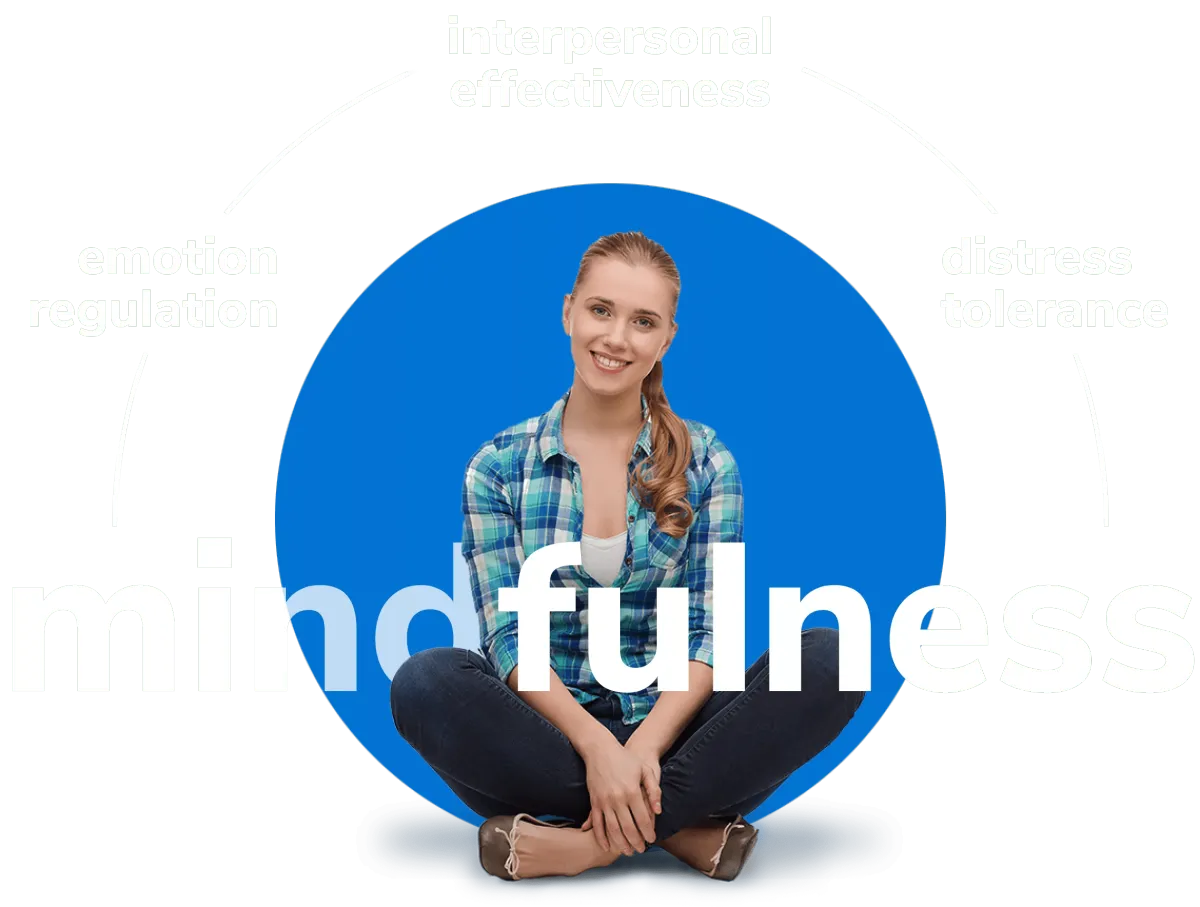
Mindfulness is the foundation skill for DBT. These 10 exercises teach you to observe your thoughts and feelings non-judgmentally, setting the stage for emotion regulation, distress tolerance and interpersonal effectiveness.
Exercise M1:
Observing
Start developing your mindfulness skills by observing a single object.
Exercise M2
Mental body Scan
Learn to relax yoour body and strengthen your mind-body connection.
Exercise M3
Internal vs. External
Lorem ipsum dolor sit amet, consectetur adipisicing elit. Autem dolore, alias, numquam enim ab voluptate id quam harum ducimus cupiditate similique quisquam et deserunt, recusandae.
Question 4: What if I feel stuck with lorem ipsum?
Lorem ipsum dolor sit amet, consectetur adipisicing elit. Autem dolore, alias, numquam enim ab voluptate id quam harum ducimus cupiditate similique quisquam et deserunt, recusandae.
Overview of DBT
Dialectical Behavior Therapy (DBT) is a structured therapy that focuses on teaching four core skills (mindfulness, acceptance & distress tolerance, emotional regulation, and interpersonal effectiveness) to help you create a good life for yourself. You work on those skills through a series of lessons and then start applying them to your life.
This free guide has approximately 40 short DBT lessons. Each lesson includes a short video and then an exercise with an accompanying worksheet. Many readers use them between sessions with their therapist or you can use them as a self-study course to do on your own. Many readers use these at-home exercises in conjunction with a therapist and many readers use them as a self-study guide.
DBT is a type of cognitive behavioral therapy (CBT). CBT focuses on helping people change unhelpful thought patterns. DBT takes those CBT ideas or challenging unhelpful thought patterns, but also adds additional elements like mindfulness, acceptance and distress tolerance, and interpersonal skills to give you more tools for dealing with hard situations. Dialectical (the D is DBT) meets opposites, and comes from the idea of combining two of those ideas - change and acceptance.
DBT Core Skills

Mindfulness
Learn to become more aware of your thoughts and emotions. Learn to observe yourself without judgment. This skill forms the foundation of DBT.
more >

Distress Tolerance
Deal with difficult situations. Cope with pain. Become confident and resilient.
more >

Manage emotions. Change unproductive emotions. Change the volume on your emotions. Create positive emotions.
more >

Learn to manage your relationships.
Ask for what you want. Say no. Manage conflict. Create friendships.
more >
How Does DBT Work?
The skills focus on four core skills, and for each skill there are around 10 lessons to help you develop that skill. Clients usually start with Mindfulness to increase their general awareness of your thoughts and emotions. Then focus on the skills that will provide the most benefit.
Each lesson is structured with a learning component that takes around 5 minutes to complete. Then there is an accompanying exercise and worksheet that will take you around 10 minutes to complete. You repeat the exercises that you find useful a few times a week until you feel like you have got what you need out of the lesson.
DBT skills training is often done in groups and is accompanied by individual treatment and coaching from a therapist. In a clinical setting learning all the skills typically takes six months.
DBT is premised on the idea that many problems are based on a skill deficit, and that by giving clients better skills they can live a happier and more productive life.
For example, instead of coping with stress caused by a difficult boss with self-injury, substance abuse, or anxiety, the client learns to reduce the stress and be more tolerant of the stress.
You may for example learn mindfulness techniques to make you more aware of triggers and your response. Distress tolerance and acceptance techniques could help you with self-soothing techniques or radical acceptance.
Emotional regulation can help you balance emotional urges with their opposites. And interpersonal effectiveness skills might help you be more assertive with your boss, set boundaries or find another job.
What is Dialectical Behavior Therapy (DBT)?
What is DBT Used For?
DBT was originally developed for Borderline Personality Disorder, but its use has now widened to a wide range of conditions including:
Anxiety & Depression: DBT helps you become aware of the negative thought patterns and change them. It also helps you focus more on the positive activity that keeps you healthy.
Substance Abuse: DBT helps you reduce cravings, avoid situations that lend themselves to substance abuse, and find better ways to manage stress.
Self-Harm: DBT provides specific techniques to manage self-harm impulses and avoid unhealthy behavior.
Attention Deficit Hyperactivity Disorder (ADHD): DBT skills help you improve impulse control and develop life organizational skills.
Borderline Personality Disorder (BPD): DBT helps moderate excessive emotions and be more tolerant of high stress levels and other triggers. It also helps with addressing associated behaviors like problem relationships, self-harming behavior, and impulsivity.
Eating Disorders: DBT helps with bulimia and binge-eating by developing distress tolerance and emotional regulation skills.
Post-Traumatic Stress Disorder (PTSD): DBT has been found useful in processing traumatic events and providing grounding techniques to reduce the severity of PTSD symptoms.
Anger Management: DBT helps you recognize triggers and provides tools to reduce emotion without aggressive behavior.
Don't worry, we can help!
This platform has completely transformed how we manage our marketing campaigns. The ease of use and powerful features have made a significant impact on our ROI.

The automation capabilities are incredible. We've saved countless hours and improved our customer engagement significantly.

The analytics and reporting features give us insights we never had before. Our conversion rates have improved by 40%.

As a small business owner, I was skeptical about investing in marketing tools. This platform has proven to be worth every penny.

The customer support team is absolutely amazing! They helped me set up my first funnel in just a few hours. My business has grown 300% since implementing this platform.

I love how everything is integrated in one place. From email marketing to appointment booking, this platform has streamlined my entire business operations.

Benefits and Effectiveness of DBT
DBT has become one of the most studied forms of therapy and has picked up popularity among therapists as evidence of its clinical effectiveness has continued to accumulate. There have been 15 significant trials of DBT to date. The evidence shows effectiveness in reducing self-harm, more treatment adherence, less time in treatment, fewer serious episodes, and patients have reported feeling better.
STILL NOT SURE?
Frequently Asked Questions
We understand lorem ipsum dolor sit amet, consectetur adipisicing elit.
What is DBT used for?
Dialectical behavior therapy (DBT) is a type of psychotherapy originally developed to treat borderline personality disorder (BPD). However, its effectiveness extends far beyond that. DBT can be used to treat a variety of mental health conditions, including:
+ Depression
+ Anxiety disorders
+ Eating disorders
+ Post-traumatic stress disorder (PTSD)
+ Substance abuse
+ Bipolar disorder
Even if you don't have a diagnosed mental illness, DBT can be a valuable tool for personal growth and change. It can help you develop healthy coping mechanisms, improve your relationships, and live a more fulfilling life.
What are the benefits of DBT therapy?
The benefits of DBT are numerous and far-reaching. Here are just a few:
+ Reduced emotional distress
+ Improved interpersonal effectiveness
+ Increased distress tolerance
+ Better emotion regulation skills
+ Enhanced mindfulness
+ Reduced suicidal thoughts and behaviors
+ Greater sense of self-acceptance and self-compassion
What is the difference between DBT and CBT?
Both DBT and cognitive behavioral therapy (CBT) are effective forms of therapy, but they have key differences:
Focus: DBT focuses on accepting and validating emotions, while CBT aims to change negative thoughts and behaviors.
Structure: DBT often uses group therapy with specific skills training modules, while CBT is typically individual therapy with a more flexible approach.
Suitability: DBT is often preferred for people who struggle with intense emotions and find traditional CBT challenging.
What is the role of a psychologist in DBT, and how often are sessions held?
DBT therapists play a crucial role in guiding individuals through the skills training, providing support, and validating their experiences. The frequency of sessions can vary depending on the program and individual progress, but typically they occur weekly or biweekly.
Can DBT be used in group therapy?
Yes, DBT is often delivered in a group therapy setting. This allows individuals to learn from each other's experiences, practice skills in a safe environment, and build a supportive community.
How much does DBT therapy cost?
The cost of DBT therapy can vary depending on factors like location, insurance coverage, and therapist fees. Some clinics offer sliding scale fees based on income, while others may accept insurance.
Is DBT effective for treating BPD?
Yes, DBT is considered the gold standard treatment for BPD. Numerous studies have shown its effectiveness in reducing symptoms, improving emotional regulation, and preventing self-harm and suicidal behavior.
In what order should DBT skills be learned?
While there's a recommended sequence, the order can be adapted to individual needs:
Mindfulness: This forms the foundation of DBT, teaching you to observe your thoughts and feelings without judgment.
Distress tolerance: Learn healthy ways to cope with intense emotions and urges without resorting to self-harm or other destructive behaviors.
Emotion regulation: Develop skills to manage difficult emotions like anger, sadness, and fear in a healthy way.
Interpersonal effectiveness: Build stronger, more fulfilling relationships by learning assertive communication and conflict resolution skills.
Who created DBT?
DBT was developed by Marsha M. Linehan, a psychologist who initially used it to treat her own BPD. Since then, DBT has become a widely recognized and evidence-based therapy approach.
How long does a session of DBT therapy last in the Psychiatric Clinic?
DBT sessions typically last 50-90 minutes. However, the duration may vary depending on the program and individual needs.

ابقَ على تواصلٍ دائمٍ ومُطّلعًا. اشترك في نشرتنا الإخبارية لتصلك نصائح الخبراء، وموارد الصحة النفسية، وآخر التحديثات مباشرةً إلى بريدك الإلكتروني. انضم إلى مجتمعنا وابدأ رحلتك نحو صحة نفسية أفضل اليوم!
Quick Links
موارد مجانية
Connect With Us
© Dr. Borhani Chemse Eddine 2025 جميع الحقوق غير محفوظة.